JUTO runs a two-year poverty graduation program adapted from the BOMA Project’s Rural Entrepreneur Access Project (REAP). It combines business and life-skills training, seed funding paid by mobile money, regular mentoring, and savings groups. Each piece helps on its own. Delivered together, in order and for long enough, they give a household a real chance of leaving extreme poverty and staying out.
The challenge
Liberia is still rebuilding after two civil wars (1989 to 2003) and the 2014 to 2016 Ebola epidemic. The country ranked 178th of 191 on the 2024 Human Development Index, and nearly 45% of Liberians live in multidimensional poverty. Poverty is deepest in the countryside. The 2016 household survey found 71.7% of rural Liberians below the national poverty line, against 31.5% in urban areas. The World Bank’s 2023 assessment, using updated methods on the same data, put the rural figure at about eight in ten. Paid work is scarce: formal jobs make up about 20% of the labor force, and only about 10% for women and young people.
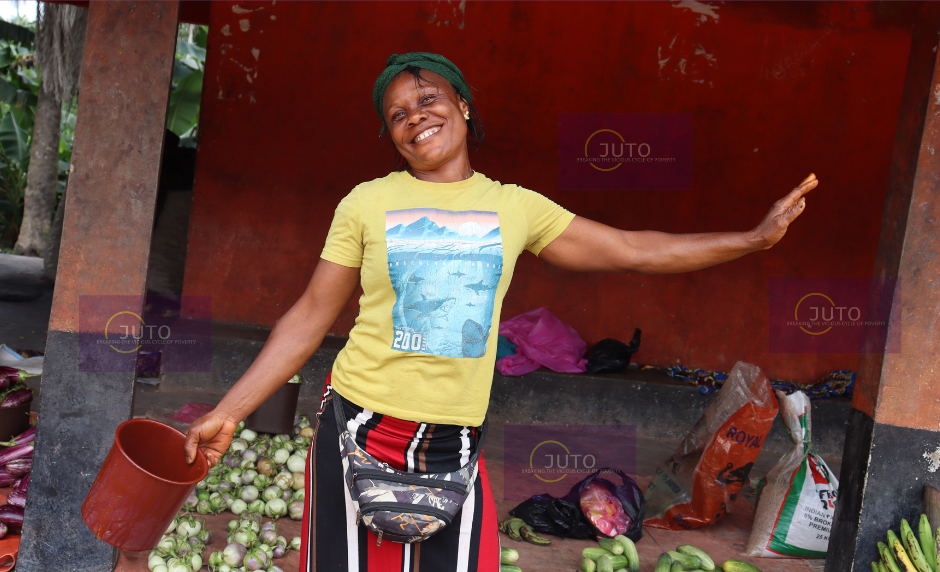
In villages across Bong County and beyond, families live on small farms, palm products and petty trade. Markets, banks and clinics can be hours away, and some roads close in the rainy season. The women who joined our pilot described cracking palm kernels or tending a backyard garden before they could put food on the table.
What holds families back
No starting capital
Banks and microfinance rarely reach remote villages, and people without collateral cannot borrow.
No business training
People trade by habit and often cannot tell whether a business is making or losing money.
No safe way to save
Susu clubs are common but offer little protection, and cash kept at home is easily spent or lost.
Nobody to turn to
Few business advisers work at village level
Our solution
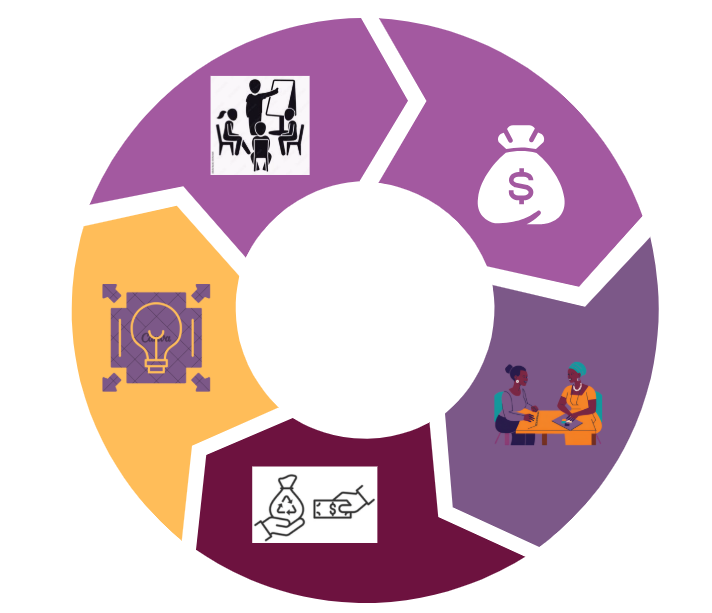
JUTO conducts contextualized training sessions on business and life skills. Field mentors train participants in their own communities, focusing on choosing a business that the local market needs, pricing, record-keeping, household budgeting, planning, and partnership. Participants are then selected to receive a seed fund based on their individual business plan.

Participants who complete the training and pitch a fundable business receive seed funding as a grant, not a loan, paid securely by mobile money to launch their businesses. In year 2, an optional expansion fund of US$500 to US$1,000 for exceptional entrepreneurs or groups of entrepreneurs with clear room to grow
JUTO ensures every participant has access to an experienced mentor who guides them through every step of their journey. In year 2, mentoring and coaching continue, with visits becoming less frequent as businesses mature.
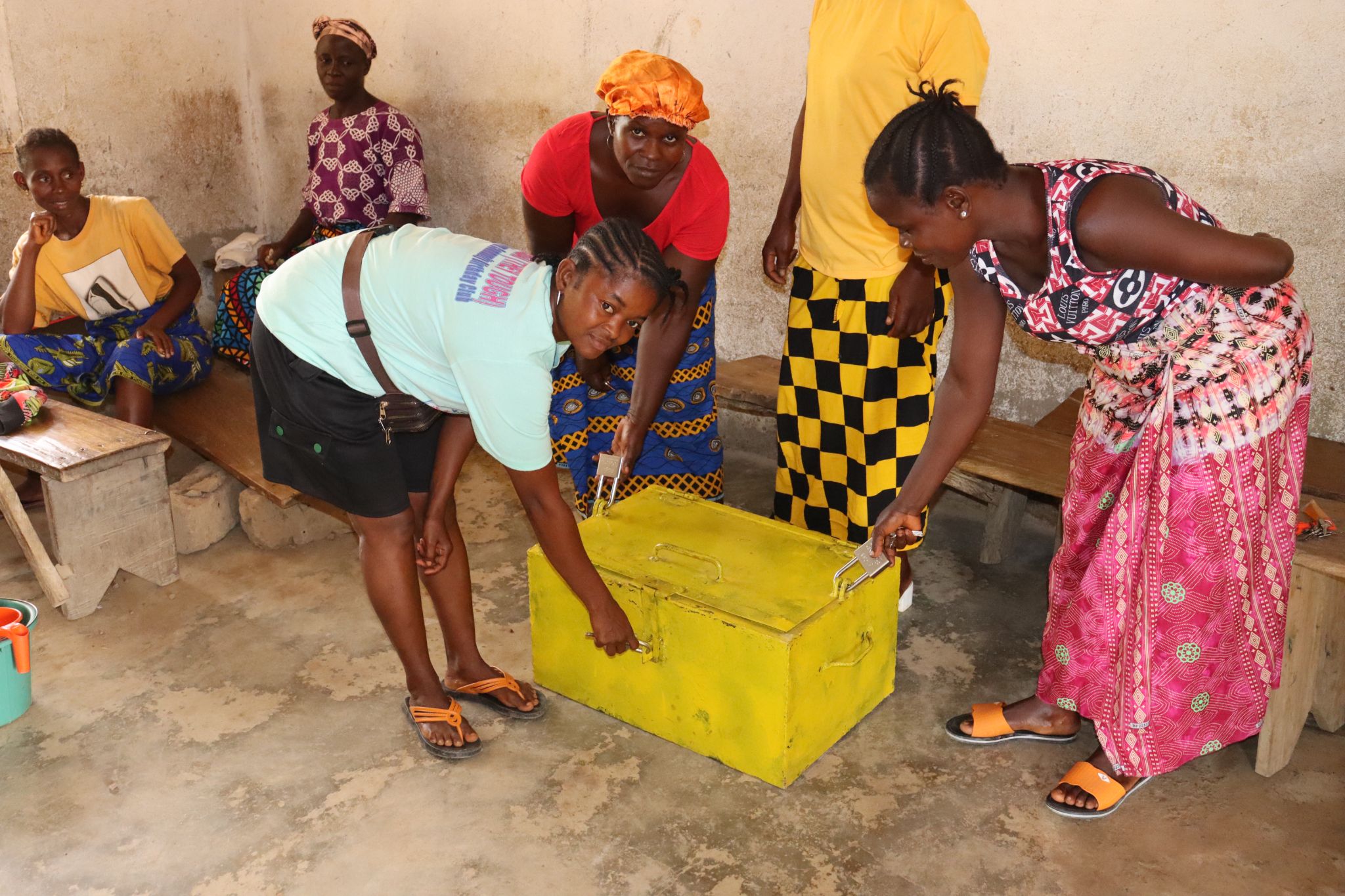
JUTO assembles participants into VSLAs. Participants join a village savings and loan association (VSLA), where members save together and lend to each other. In year 2, participants continue savings and JUTO facilitate their access to financial institutions, including help to open accounts with banks, credit unions, rural community finance institutions or mobile money services.
Businesses run by three partners
Participants start their businesses in groups of three. Partners share the work and the risk, and can cover for each other during illness or childcare. The seed funding is managed jointly at first and moves over time into individual savings. Profits are split equally into each partner’s own savings account, so every woman builds savings in her own name. Many partnerships later become individual businesses.
What we expect by the end of two years

Human capital investment
School-age children are enrolled, and the family can pay for health care.

Food security
Household/family eats enough, reliably.
Sustainable livelihood
Every woman has an income, holds savings in her own name, and belongs to a savings group that keeps meeting after JUTO steps back
Above the Extreme poverty line
The Household/family can meet the World Bank’s international extreme poverty line of US$2.15 a day. Businesses keep trading, and many families have more than one source of income
Why this design
The program builds on a proven graduation approach tested in parts of Sub-Saharan Africa. Randomized studies of graduation programs in several countries have found gains that last, and it is evident that the approach can work in Liberia. Our own six-month pilot in 2023 and 2024 showed where our first design fell short. We lengthened the program to two years, moved to groups of three and began measuring the whole household, not just the business.
Pilot Phase
Our pilot gives us early signs. By the end of six months, 90% of households could afford enough reliable food each day, 92% of participants were meeting their savings target, and about 80% of households had every child in school.